
Catfish Pimodella Pictus Spotted
$12.35
- Date Received: 06/19/2025
- Size: 4"
- LOC: 40
1 in stock
| Care Level | Moderate |
|---|---|
| Temperament | Peaceful |
| Diet | Omnivorous (flake, freeze dried, pellet, frozen, vegetables, live foods) |
| Water Conditions | Stable Parameters are Key, |
| Max Size | Up to 4 - 6 Inches |
| Scientific Name | Pimelodus pictus |
| Minimum Tank Size | 55 gallons or larger |
| Compatibility | Good tank mates for the Pictus Catfish (Pimelodus pictus) are medium-to-large, active, and peaceful freshwater fish that grow to at least 2.5 to 3 inches as adults so they cannot be swallowed such as: Tetras & Characins: Larger active tetras such as Colombian tetras, Congo tetras, Phantom tetras, and Green Fire tetras. Barbs: Medium-sized barbs like Rosy barbs. Danios: Giant danios. Rainbowfish: Larger species of rainbowfish. Bottom Dwellers & Plecos: Bristlenose plecos, larger Synodontis catfish, and fast-moving loaches like zebra loaches. Other Pictus Catfish: They are a social, schooling species and thrive best in groups of 3 to 6 or more of their own kind. |
| Avoid Housing With | Nano Fish & Small Species: Anything under 1 inch or small enough to fit in their mouth, including neon tetras, ember tetras, chili rasboras, guppies, and dwarf shrimp. Slow or Long-Finned Fish: Bettas, discus, and slow-moving, delicate fish that can be stressed or nipped by the Pictus's constant, active movement. Aggressive Cichlids: Aggressive or large territorial cichlids (such as Oscars) that may fight with or injure them. Goldfish: They require different water temperatures and care conditions. |
| Location | 40 |
| Date Received | 06/19/2025 |
| Current Size | 4" |
Description
Catfish Pimodella Pictus Spotted
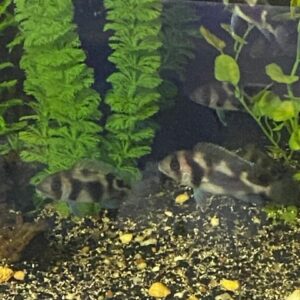
Catfish pimodella pictus spotted is a popular freshwater fish native to the Amazon and Orinoco river basins in South America. It grows up to 4 to 6 inches long, features a silver body with distinct black spots, and has very long barbels (“whiskers”). A minimum of 55 gallons for a single fish or small group, as they are very active and need open swimming space. Use a soft, sandy substrate to protect their delicate barbels and sensitive, scale-less bodies. Include driftwood, caves, and dim or floating plants to provide shady hiding spots. They are a social, shoaling species and feel most secure when kept in groups of 4 to 6 or more.
Omnivorous and greedy carnivores. Feed them sinking catfish pellets, carnivore wafers, bloodworms, brine shrimp, and other protein-rich foods. They will eat any small fish or slim-bodied tetras (like neon tetras) that can fit into their mouth. They feature sharp, mildly venomous pectoral and dorsal spines—handle them with care during tank maintenance to avoid painful pricks.
Additional information
| Weight | 2 lbs |
|---|
Only logged in customers who have purchased this product may leave a review.
Related products
-

Jacobfreibergi Eureka Red Male Tank#93
$70.00 Add to cart -
Catfish Synodontis Upside Down
$8.68 Select Quantity -
Frontosa Black Widow
Price range: $75.00 through $200.00 Select options This product has multiple variants. The options may be chosen on the product page -
Cichlid African Peacock Lemon Jake Male-L
$48.13 Add to cart


Reviews
There are no reviews yet.