Snail Bumblebee Info and Care
By PJS Tropical Fish Inc
October 11, 2026
PJS Freshwater Tropical Fish Snail Bumblebee
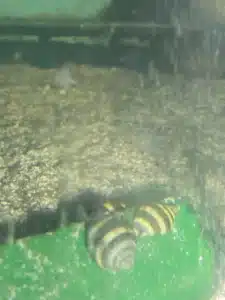
Snail Bumblebee
The Ultimate Bumblebee Snail Care Guide by PJS Tropical Fish
Welcome to the official blog of PJS Tropical Fish! If you are a marine aquarium hobbyist in Brownsville, Wisconsin, or the surrounding Fond du Lac area looking to optimize your clean-up crew with exceptional marine livestock, you have come to the right place. Today we are doing a comprehensive deep dive into a small, striking, and highly functional reef invertebrate: the Bumblebee Snail. This guide will provide everything you need to keep this species thriving in your aquarium, leveraging our decades of professional experience here at PJS Tropical Fish Inc.
Taxonomy & Origin
- Species Name: Engina mendicaria
- Family Name: Pisaniidae (Historically aligned with Buccinidae or Columbellidae)
- Other Names: Striped Engina, Wasp Snail, Bumble Bee Snail
- Geographic Origin: The tropical Indo-Pacific region, widely distributed across the Red Sea, East Africa, Madagascar, the Marshall Islands, northern Australia, and Papua New Guinea.
- History in the Hobby: The beautiful, distinct shells of Engina mendicaria have been coveted by humans for millennia, with historical evidence of their use as ornamental beads dating back to 5000 BC. They were introduced into the modern marine aquarium industry during the reef keeping boom of the late 20th century. Hobbyists quickly realized that their diminutive size made them uniquely equipped to clean areas other species could not access.
- Unusual and Unique Facts:
- They possess a specialized, elongated proboscis—a tube-like mouth structure that they extend deep into rockwork holes to extract hidden prey.
- They are highly celebrated natural predators of pest Vermetid snails, using their predatory adaptations to control unwanted populations.
- Unlike standard clean-up crew invertebrates, they are whelks and true carnivores rather than traditional algae-grazers.
- How it is Supplied Now in the Industry: Bumblebee Snails are primarily collected from wild intertidal reef zones across the Indo-Pacific. At PJS Tropical Fish, we select, condition, and ready our livestock to an “old school,” retail-ready standard, giving local hobbyists in Wisconsin and nationwide buyers access to robust, fully stabilized specimens.
Natural Environment
- Habitat and Structure: In nature, these snails occupy intertidal zones, shallow reef flats, and rocky shorelines, typically at depths of 2 to 4 meters. They spend daylight hours heavily wedged under basalt rocks, coral rubble, and deep crevices to seek shelter from predators and extreme environmental shifts.
- Water Parameters: They inhabit warm, tropical marine environments. Natural conditions feature temperatures between 72°F and 82°F, a stable specific gravity of 1.023 to 1.026, and an alkaline pH ranging from 8.1 to 8.4.
- Natural Behavior: They are strictly nocturnal, crevice-crawling organisms. They emerge from hiding when darkness falls, navigating the reef structure or burrowing shallowly into sand beds to forage via chemical sensing.
- Natural Diet: As obligate carnivores and scavengers, their wild diet comprises microfauna, small polychaete worms (such as bristle worms), carrion, and other tiny mollusks. They do not consume decomposing plant matter or macroalgae.
- Diseases in Nature: In wild ecosystems, marine gastropods are occasionally subject to parasitic arthropods, microsporidian infections, or shell-boring organisms, though clinical documentation specific to wild Engina mendicaria remains minimal due to their resilience.
Captive Environment
- Habitat and Structure: To mirror their natural environment, your aquarium must feature substantial live rock arrangements full of tight fissures and a mature sand bed of at least 1 to 2 inches. This infrastructure supports their cryptic nature and allows them to perform substrate aeration.
- Water Parameters: Keep parameters stable to avoid stress. Maintain temperature between 72°F and 78°F, salinity at 1.023 to 1.025 specific gravity, pH at 8.1 to 8.4, and alkalinity at 8 to 12 dKH. Regular tracking of calcium levels (350–450 ppm) is vital to support healthy shell development.
- Behavior in Captivity: They remain largely sedentary or hidden during the day, wedging themselves into the rockwork. Once your display lights turn off, they become highly active, traveling along the boundaries of your aquascape and filtering through upper layers of the substrate.
- Diet in Captivity: While they scavenge for organic debris and target pests, captive populations require adequate nutrition if your tank is pristine. Supplement their ecosystem by offering high-protein meaty choices, such as finely chopped mysis or brine shrimp.
- Disease in Captivity: In closed systems, invertebrates are exceptionally vulnerable to rapid chemical swings, high nitrates, and copper-based therapeutic agents. If your system encounters health issues, refer to the PJS Diseases / Parasitic Ailments Guide to identify underlying vectors safely. When managing concurrent fish diseases, consult our protocol on PJS Chemotherapy of Aquatics. Always administer targeted treatments such as Metronidazole, Praziquantel, or Kanamycin in an isolated quarantine tank, ensuring that medications harmful to invertebrates never enter your main display.
Importance of Livestock Acclimation
Introducing your Bumblebee Snail to its new environment requires patience and precision. Following the official PJS Tropical Fish Acclimation Procedure is an absolute requirement for long-term survival. The primary goal is ensuring your water chemistry and temperature closely match, aiming for a deviation of zero degrees if possible. Water source chemistry varies drastically from city to city and tank to tank. Implementing a careful drip acclimation process grants your snails the time needed to adjust their bodies via osmoregulation, adapting safely to the unique chemistry of their new home and preventing lethal osmotic shock.
Selecting the Right Tank Mates
- Good Tank Mates: Ideal choices include peaceful community reef fish such as clownfish, goby, firefish, and cardinalfish. They also coexist perfectly with larger herbivorous snails like Turbo, Trochus, and Astraea snail, as well as reef-safe urchin and starfish.
- Bad Tank Mates: Avoid predatory or invertebrate-hunting fish. Large wrasses, pufferfish, and large dottyback will readily target small snail. Additionally, aggressive crab or large hermit crab may attack the Bumblebee Snail for food or to steal its distinctive shell.
Frequently Asked Questions
- Do Bumblebee Snails eat nuisance algae? No. They are strict carnivores and scavengers. They do not eat hair algae, bubble algae, or film algae.
- Are Bumblebee Snails completely reef-safe? Yes, they are entirely safe around soft corals, LPS, and SPS. However, if they are severely underfed, they may occasionally prey on beneficial micro-frequently or tiny ornamental fan worms.
- How many Bumblebee Snails should I add to my tank? A standard recommendation is 1 snail per 5 to 10 gallons of display volume. If you are combatting a major Vermetid snail infestation, a density of 5 to 10 snails per 20 gallons can be used.
- Why is my snail’s shell turning white or pitting? This is a sign that your aquarium water is too acidic or running low on essential minerals. Ensure your pH remains above 8.1 and monitor your alkalinity and calcium levels regularly to prevent the shell from dissolving.
